



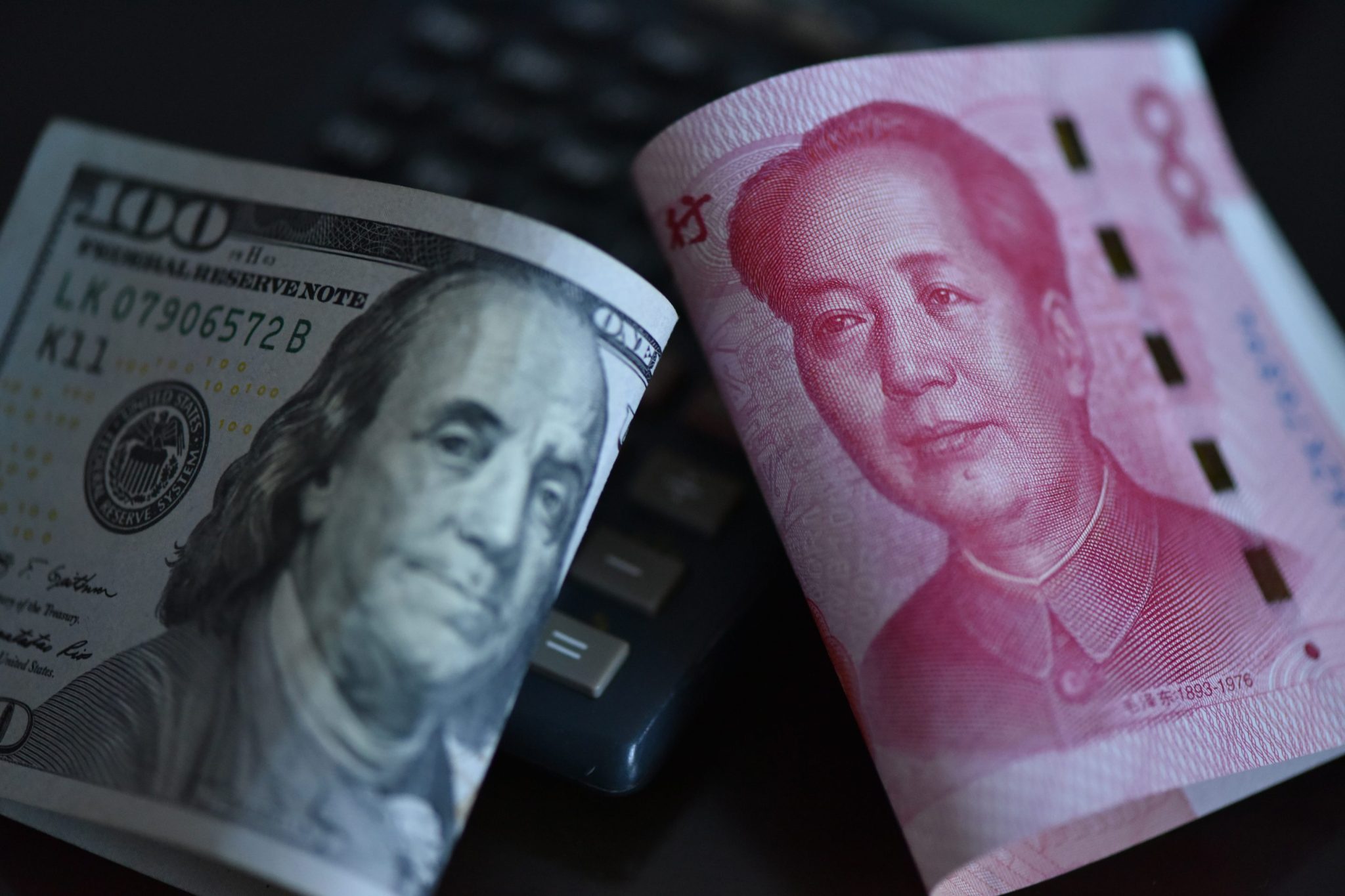
Saudi Arabia quietly dropped out of China’s mBridge digital payment platform, which Beijing has touted as an alternative to the dollar-dominated SWIFT system, according to the Financial Times.
China launched mBridge in 2021, enabling central banks to use digital currencies to carry out transactions directly via blockchain technology.
China, Hong Kong, Thailand, the United Arab Emirates and the Bank for International Settlements (BIS), the so-called central bank for global central banks, initially signed up.
Saudi Arabia told the FT that its central bank, also known as SAMA, first joined “mBridge under the umbrella of BIS as an observing member” in 2023 as part of its research into central bank digital currencies, then participated in efforts in 2024 to create a proof of concept.
“As planned, SAMA successfully completed its mBridge [proof of concept] on 13 May 2025. Following the completion of the PoC, SAMA is no longer a participating member of mBridge,” a statement from the central bank said.
A source also told the FT that the Saudi Central Bank no longer wanted to be publicly involved with mBridge. When asked if the kingdom came under U.S. pressure to withdraw, another source said it would be “inaccurate to draw any wider inference.”
That’s after the BIS left mBridge in October 2024 as the U.S. reportedly lobbied it to exit. But the BIS said it had “graduated out” and denied there were any political considerations.
Saudi Arabia’s initial participation was seen as a major win for mBridge as the oil-producing giant serves as the foundation of today’s “petrodollar” regime that goes back to a deal struck in 1974, when Riyadh agreed to price its oil in dollars and invest surpluses in U.S. assets.
The petrodollar eventually spilled over to other areas of commerce, and the greenback is now used in about 90% of global transactions.
Because oil is a core input to global manufacturing and transport, supply chains have a natural incentive to dollarize. Indeed, Mideast oil and gas is used to make petrochemicals, fertilizer, and even helium, which is critical to chipmaking.
“The world saves in dollars in large part because it pays in dollars,” Deutsche Bank said in note in March. “The dollar’s dominance in cross-border trade is arguably built on the petrodollar: globally traded oil is priced and invoiced in USD.”
Still, the greenback has faced challenges, especially after U.S. sanctions cut off Russia from the dollar-based financial system in response to the Kremlin’s invasion of Ukraine in 2022.
Other countries feared they may one day be targeted with similar sanctions and have been reducing reliance on the dollar-denominated assets. Central banks, for example, have been loading up on gold in recent years while trimming their holdings of U.S. Treasuries.
Saudi Arabia has even flirted with pricing some of its oil sales to China in yuan. Meanwhile, Iran and Russia are using the Chinese currency to get around U.S. sanctions.
The Iran war could put further strain on the dollar. If Iran succeeds in forcing other countries to secure safe passage via the Strait of Hormuz by paying Tehran in yuan, Deutsche Bank warned it could give rise to the “petroyuan.”
“The current conflict may expose further fault lines, by challenging the U.S. security umbrella for Gulf infrastructure and the maritime security for global trade in oil,” analysts added.
Meanwhile, Beijing has extended currency swap agreements with other central banks and promoted yuan-based transactions with top trade partners to further weaken the dollar’s dominance.
And mBridge has been making gains despite the departures of Saudi Arabia and the BIS, while adding Macau as a participant recently.
A report from the Atlantic Council early this year found that transactions on the platform had surged to more than $55 billion, representing a roughly 2,500-fold increase since 2022.
“Project mBridge is unlikely to challenge dollar dominance directly, but it may incrementally erode it,” the Atlantic Council’s Alisha Chhangani told Reuters in January.