
Ramona Rosales for Variety
 HollyRod Gala to Honor Samuel L. Jackson, LaTanya Richardson Jackson
 Strategy buys 950 Bitcoin for $75.7M after pause
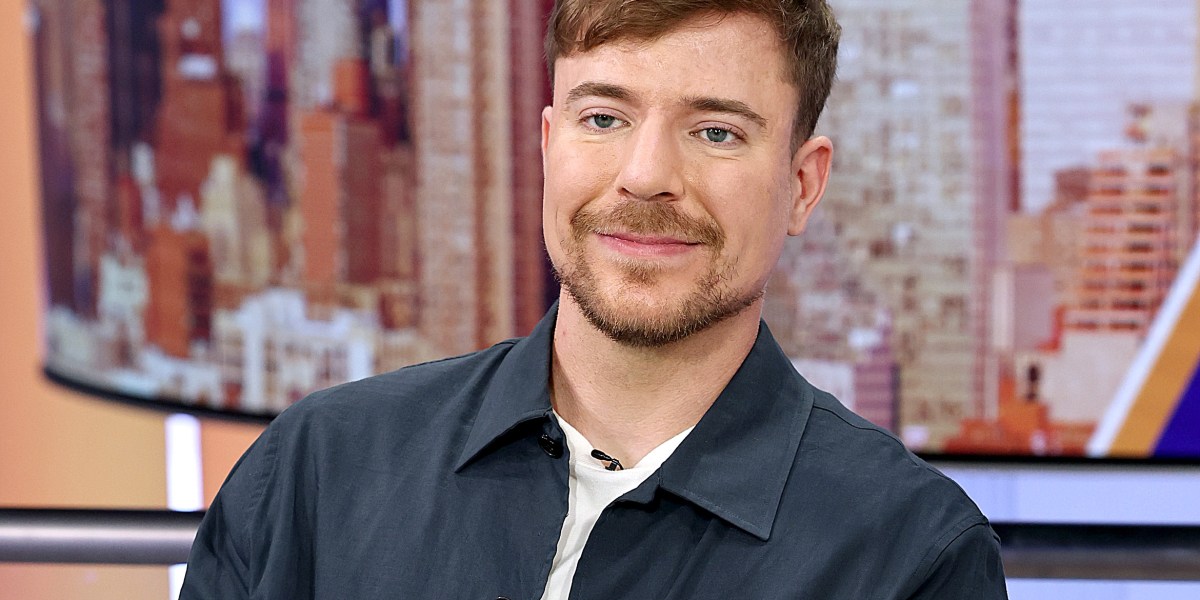 Jimmy Donaldson, MrBeast, discusses philanthropic work after Ghana village build
 RT Features Unveils Stars of ‘Bodies of Summer,’ From Iván Fund
 Billionaire Warren Buffett once called Berkshire Hathaway the ‘dumbest’ stock he ever bought
Melissa McCarthy, one of the most gifted comic actors working today, will soon be starring in a tragedy.
In “The Murder of JonBenét Ramsey” — premiering on Netflix on Dec. 10 — McCarthy plays Patsy Ramsey, the mother of 6-year-old JonBenét, who was killed in the Ramseys’ Boulder, Colorado, home on Christmas night in 1996. Because JonBenét had won several child beauty pageants, images of her in makeup and garish costumes created a spectacle around the case (which is still unsolved), and around the Ramseys. JonBenét’s father, John; her mother, and even her 9-year-old brother, Burke, all became suspects in her murder, and the series examines the fallout from her death.
Ramona Rosales for Variety
Because of the O.J. Simpson trial in 1995, true crime had become a national obsession, and with JonBenét’s murder, newsmagazines, talk shows and tabloids had a field day, inciting the public to rabidity: Today, McCarthy remembers being part of the “feeding frenzy” herself. Clive Owen, who plays John, says McCarthy’s involvement as both an actor and executive producer was a “big part” of the reason he agreed to take the role. “Yes, she’s a brilliant comedic actress, but she’s just a brilliant actress,” Owen says.
“The Murder of JonBenét Ramsey,” from showrunner Richard LaGravenese (and made without the family’s involvement), was an emotionally wrenching endeavor, and McCarthy and Owen formed a bond. “We have become friends,” he says. “Because it was such a difficult project, just having her alongside as an ally was really, really important. And honestly, after doing this project with her — she can do anything.”
And she has. After playing chef Sookie St. James in the beloved dramedy “Gilmore Girls” from 2000 to 2007, McCarthy broke out in film in 2011’s Paul Feig-directed blockbuster “Bridesmaids” as the crude yet earnest Megan. The scene-stealing role brought her a best supporting actress Oscar nomination, a rarity for comedy — especially given that in the film’s famously gruesome food poisoning set-piece, Megan uses a sink as a toilet. McCarthy was shocked when she learned of her nomination, saying to her husband, director Ben Falcone, “I don’t think that’s true,” when he told her. (McCarthy was nominated for an Oscar a second time, for her fearless lead performance in Marielle Heller’s 2018 “Can You Ever Forgive Me?”)
Over her career, McCarthy has starred in hit comedies such as Feig’s “The Heat” and “Spy” and Falcone’s “Tammy” and “The Boss” — and as the villainous Ursula in Disney’s 2023 live-action version of “The Little Mermaid.” But with “The Murder of JonBenét Ramsey,” she returns to her earliest training in New York City, when she spent two years studying the Sanford Meisner method of acting. Back then, McCarthy was “carrying folding chairs up to a rehearsal space to do a show and just making enough money to hopefully pay for the space that night.”
Despite the different scale of audience, the same passion and community spirit went into “The Murder of JonBenét Ramsey,” McCarthy says in her first interview about the series, with the cast and crew putting in “hardworking days” while suffering through “hard moments.” Wanting to do right by Patsy, who died of ovarian cancer in 2006, McCarthy found people who knew her. “And they were like, ‘Those kids were in jeans riding their bikes. JonBenét wasn’t out in a pageant dress in her front yard.’”
I said, “Oh, no. I have no interest in that.” I didn’t think it was any of my business to do, I guess? But I spent a lot of years not working, and somebody took the time to ask me — I should take the time to look into it. The more I started to, I was really floored by the lack of humanity that had been shown to that family. In 1996, I was 26, and I have a very vivid memory of standing in a grocery store and looking at a tabloid and thinking, “How could you dress a little girl like that?” Because that’s what we were being told.
I had never put it together that I was a part of [judging them]. I went willingly. And that’s on me. I just thought if it can make some people realize, “Oh, God. I was part of that — I did that,” it gives us a little of our humanity back. And the hope is not to dredge it up for that poor family again.
This might sound nuts: I’m very fond of Patsy. I have so much compassion for them, what they went through, and go through currently. That’s a bizarre thing to have a child’s trauma be like Wimbledon. It was a turning point, being able to watch something like that as sport.
And even when I finally decided to do this, everybody said their theory [about the case] as if it was true.
People in my life! Very smart people, very open-minded people. I was like, “What is that based on?” Because I’ve now read every police report, every coroner’s report. So we’re still doing that. I said, “You got caught up in the riptide.” I hope with my whole heart that this — I don’t know if “helps” is the right word.
Clive Owen and Melissa McCarthy
Courtesy of Chris Large/Paramount+
This is not a whodunit. It’s not like, “Ooh, there’s a big reveal!” This is a character study of everyone who was caught in the undertow, and a look at all of us — as a civilization, really. Seeing that happen to a child I think breaks everybody.
We do show all these different theories. They were all real working theories. Showing the chaos of it is something that we’ve not seen. It’s a new telling of it, because you’re like, “My God, is this really what was happening?”
Yes. Just my personal feeling. My heart says no one in the family could have done that. I don’t have the ability, or probably the right, to say that, but that’s what my gut says. Which I probably am not supposed to say.
But shooting that, I had to pick. I had to have that for myself, if nothing else.
It’s tricky. Luckily, I loved who I was working with. I’d never worked with Clive before — I can’t say enough good stuff about him. What a joy of a human. Everybody in the cast, every single person, they’re fantastic. It just felt elevated. And I felt like everybody knew that we had to do right by the story and not just try to do something that’s going to get a lot of views. That set was so serious, and some of those days were so hard. We had a psychologist on set at all times.
And it was needed sometimes, especially during some of the really intense scenes. It would take people down, and they’d just need a minute. I felt obligated to stand up for her, which — maybe it’s none of my damn business, but I feel protective of her. It makes you get up and go to work every day and try to give it your all.
I had rather weird sleeping hours. It would depend on what the next day held, but I called my kids, for sure, and my husband, and made sure throughout the day I talked to them and checked in on days when I could. Some days I couldn’t. I didn’t want them to see me in that state.
Sleep wasn’t always great when that’s what was in my head. But I was like, “Well, I bet she wasn’t sleeping great either. So get up! Get up.”
I think about the one thing I can’t control, which is how people will receive it. And, of course, you think about the family. My intentions don’t mean anything — their feelings are their feelings, and all I can do is hope that I did right by them and by Patsy. The only people that really get a vote are them.
I would. Again, I don’t know if I’m supposed to say this: I’ve written John many letters that I haven’t sent. I wrote before we did it. I wrote, during the thing, to him and Burke — many letters — to be like, “I’m doing my best by her. I’m really trying to show who I felt she was.”
“Bridesmaids”: Melissa McCarthy, Ellie Kemper, Rose Byrne, Wendi McLendon-Covey, Maya Rudolph, Kristen Wiig
Courtesy of ©Universal/Courtesy Everett Collection
My very first stuff in New York was stand-up. I did all the free cheap rooms where you got a minute and a half, and you worked your way up to two and a half minutes and so on. But then I didn’t like those rooms anymore — I just found them really misogynistic. There was literally a guy in every room saying, “Show me your tits.” To the point where I was like, “Is it the same guy? The same lonely guy?” He’s not going to stop. The only way to make him stop is to eviscerate him. I was like, “I’m here to try to make people laugh, and now the only way I win is if I actually embarrass you. I see I’ve done that and now you’re quiet. So now I feel terrible.”
I love live performance; it’s my favorite. But that realm was not. I didn’t want a fistfight.
And then I moved to L.A., and my sister sent me a little magazine story about the Groundlings.
I was like, “Oh, there must be amazing theater in L.A.!,” because I’d never been here when I moved here. When I was doing stand-up, I didn’t really know how to write, so a lot of it was improvised. I also had a thing of like, “You’re not a writer unless you’ve been trained to write.”
I would always go up with a paper, and I would do my monologue, and Ben was the first person that leans over and he goes, “Why do you always go up with a blank page?” I was like, “What? What are you talking about?” He’s like, “You go up with a blank page, you do a monologue.” I was like, “That’s not writing.” And he’s like, “It is writing.” I was like, “No, it’s not, because I don’t know how to write.” He’s like, “You just did a whole monologue, and then you wrote down what you said.”
I had such a weird, I didn’t go to college — I’m not a writer. Groundlings literally taught me to be like, “OK: You are writing, you are doing this.”
The fact that Kristen and Annie let me come in for that truly changed my life. I thought I blew the audition because I got too weird, because I was sitting there improvising with Kristen. I got too comfortable! I said weird things!
Before “Bridesmaids” was released, people were like, “The numbers are not looking good.” And I was like, “It’s not out yet.” And they’re like, “We know how to do this, and the numbers are not looking good.” And I was like, “OK, but I’m just saying I think it’s really funny and I think people are going to think it’s really funny.”
Opening night, Ben and I were sitting in Paul Feig’s backyard with him and his wife, Laurie, and we’re having dinner and Paul’s like, “Oh my God. Oh my God. I think it’s working! It’s working!” Then all of a sudden he’s like, “Every theater in L.A. is full. Get in the car, get in the car, get in the car!” We went to the ArcLight, I think? We just stood in the back, and it was rolling, crazy laughter.
Yes. We were like, “Oh my God, it’s working! What we think is funny is funny!” It was about that group of people; it was about the characters. Just running through theaters, and Paul in his suit — and Ben and I not dressed as nicely.
No, nobody.
Yes. Which is insane, but it did. Two women wrote it; we all felt like this is what’s funny. This is what we as women write about and talk about, and we are this weird. And it wasn’t about, “My dress isn’t perfect!” even though that was part of it. This is what trying on dresses really is like — it’s a bit of a shitshow.
Disorienting. Now I can’t remember if Octavia’s name was said first or mine. Jim Rash and Nat Faxon were nominated for “The Descendants.” Kristen and Annie were nominated for screenplay — this was, like, our weird ragtag group. And I just kept saying “Octavia’s nominated!” Ben went, “Mooch, you just got nominated.” I was like, “I know Octavia got nominated for an Oscar!” And he was like, “You just got nominated for an Oscar.” I was like, “I don’t think that’s true.” And he’s like, “We just watched it.” Then I just balled my eyes out.
And Jim and Nat won that year. We were all just there — and we were like, “What are we all doing here? This is amazing!”
But our own Academy, our own industry, doesn’t respect comedy. I don’t know when that became the thing to do — and you can call any project a comedy to get into an awards category. Anybody just gets to claim it, because no real comedies are ever going to get awarded. I’m stopped 15 times a day by somebody who says, “I desperately need you to do another comedy.” And I’m like, “We are trying. I’m trying!” And people need it, that’s for sure.
“The Heat”: Sandra Bullock and Melissa McCarthy
©20thCentFox/Courtesy Everett Collection
Paul should be legally bound to make one comedy at least every two years. His taste level as a filmmaker, his visual aesthetic, is so good — which is important. You have to make a proper film. It has to look good. It has to have great pacing. And he’s just funny as hell. He just wants to lift other people to be as funny and as good as you can possibly be. I miss him doing comedies — for myself, but also as an audience member. We’ve made it so hard to do comedies that we have our best and our funniest people not doing what they do.
I think the narrative of comedies don’t work anymore is bullshit. I think it’s absolute bullshit. It’s a false narrative. Comedy is like music. It’s a feeling — not everybody can do the same thing. Two equally incredible musicians have totally different styles. You don’t go in and break someone’s style or what they do; you have them do the best of what they can do.
I think because people can laugh at a movie, for some reason, it’s less respected. And so they think, “Well, I know what’s funny.” And I always want to be like, “You’ve never been funny to me! You’ve never said anything funny. You’ve never thought of a funny idea.” It doesn’t mean you’re not great at your job —
People at all the levels are now like, “Let me tell you who to put in to make it funny…” And I’m like, “Well, those four people aren’t funny.”
It’s like Feig putting in Jason Statham in “Spy.”
Paul and I went out to dinner with Statham, and we were just goofing around the table, and I was like, “Stop talking about it! Just do what you’re doing — it’s so funny.” But Paul had the idea to be like, “What about Statham?”
But when you take all of the artists out of it — they start to do the math of it, and that’s not comedy. They want a big premise. But most really great comedies, it’s about the people and the characters and the story, and it’s not like, “And they were both aliens at the end!” But people really think they want that hook, and it’s just not real. Then they say comedies don’t work, and I’m like, “No, bad comedies don’t work.” And I won’t take the fall for that.
“Spy” Melissa McCarthy and Jason Statham
©20thCentFox/Courtesy Everett Collection
We should be on the ninth “Spy”! Everyone on “Spy” was ready to re-rack immediately. There should be a new villain, new location.
No — well, Jesus, that probably doesn’t help, but I don’t know. It did so well. People can say that doesn’t matter. I think it does. For “Thunder Force,” we were going to roll right into another one. We were like, “It’s so fun. It did incredibly well for Netflix. We already have the idea for it.”
If I write something — or Ben and I write something — and it tanks, I’ll take the fall. Which we have not had to take. We don’t make $8 billion. We don’t make those kind of movies, but, I mean, $120 million, I’m not mad at that. The studio’s not mad at that. We want to make a reasonably priced thing that makes you a good profit. For some reason, that model is no longer desirable. I can’t figure out the math of it.
That I don’t know.
It was, but it was also so fun. Oh my God, it was so fun. Literally laughing on set in such a way that I am shocked that we shot stuff. Rose [Byrne] is such a wonderful, bad laugher. On the plane, her little stick arms are up, and when Ben and I are doing our weird thing, she just laughs out loud. It’s a glorious thing. She just kept putting the magazine up to hide — and it’s in the movie.
So that was what shooting was like. It was like you were literally hiding because someone was always like, “Oh, I’ve dropped something,” because they’re under the table laughing. That’s just not a bad day.
I don’t know. I think it’s gotten so corporate. I miss the people that work off their gut.
[Sighs] What madness. It does really correlate! When people were like, “You’re ruining our childhood,” I was like, “You definitely seem like you had a terrible childhood.” It just had so many cooks in that kitchen.
Oh my God, I loved her show. I almost got nervous, like, “It’s so good. Is it not going to do well?” And I ate it up. I couldn’t get enough fast enough. Then I just started hearing person after person be like, “Have you watched this thing?” It is not shocking that Katie Dippold wrote something incredible. I’m just like, who’s the genius that backed off and let her?
“Gilmore Girls”: Melissa McCarthy and Lauren Graham
©CW Network/Courtesy Everett Collection
It’s good training, I tell you that!
It was hard! It was really hard. But to me, that was normal, because it was my first show. So I was like, “Oh, our scripts are 93 pages, and you can’t change a contraction, even if you get them that morning and it’s a 10-page oner.”
And that’s just what it was. I love that she had her own style, and I love that she built that world. I love that she fought for it, because a woman running that show at that time, I think you kind of had to be like, “It’s my way or the highway.” I think she had to probably fight to keep it the way she wanted to. And I’m glad she did, because it stood the test of time. People really take ownership of that show.
And the fact that they keep re-watching it. I’m like, “Really?” It’s so funny, my kids have not watched it. But Vivian and I were both home with the flu — this is years ago. And it came on and she was like, “That’s your show, right? That was your first show?” I was like, “You’re on the very end of that show when I’m pregnant.” I think I’d had four kids on the show. And then I finally went to Amy and I’m like, “I’m actually pregnant. You can have me have another kid again, and I’ll give you the prop for free.”
And she was like, “No, I don’t think so.” So then I had to hide it! I was like, “We already have four kids. I can’t have five?” But we watched just the pilot, and Vivi, my oldest, she kept going, “What are you doing with your voice?” And I was like, “Oh, it’s youth.” She’s like, “That doesn’t sound like you at all.” I was like, “Yeah! I was youthful and I didn’t have kids yet. And now I sound like this grizzled old man.”
Courtesy of The CW
It was fun to see everybody again. I still see Lauren [Graham] and Yanic [Truesdale]. We’ve gone on vacation with Yanic. We’re really close. I just wanted to go and see everybody. So it was really nice to do. I always wonder, will something else happen with that? I don’t know anything about it, but —
When something catches like that, there’s no rhyme or reason. You have to just love it. I mean, I’m always shocked at all the “Gilmore” comments when I’m out. I’m like, “I’ve worked since then!” But it is nice. And I think we all are very aware of that, or I hope so. But when something catches like that, like “That’s my comfort show,” or, “That’s what I watch going to sleep” — what a thing to get to do something that gives people comfort like that.
It’s the coziest! I felt lucky doing it, and I feel lucky to have been a part of it.
Courtesy of Joyful Heart Foundation
Melissa McCarthy remembers meeting Mariska Hargitay the old-fashioned way: through their assistants. Hargitay, McCarthy says, seemed like someone who “probably has her shit together” enough to make recommendations for, say, “a good water filtration system.” Their texting relationship soon blossomed into a real-life friendship, which, McCarthy says, “doesn’t always happen when you meet a new friend in your 50s.” As Hargitay puts it, “When we finally did meet in person, our hearts did a dance.”
Their dynamic is a playful one. When Hargitay rolled her ankle and needed surgery in July 2021, McCarthy stood on a Burbank street holding a sign asking drivers to honk to speed up the “SVU” star’s recovery. And earlier this year, McCarthy surprised Hargitay by doing a cameo on “SVU.” (“I still don’t know how they pulled it off,” Hargitay says.)
For her Power of Women charity, McCarthy is putting a spotlight on Joyful Heart Foundation, which — inspired by the subject matter of “SVU” — Hargitay began in 2004 to advocate for survivors of sexual assault, domestic violence and child abuse. While other actors might have just said, “This is what I do for a living,” McCarthy says, Hargitay instead embraced it as a responsibility. “Her power is through kindness and consideration and a moral compass.”
For Hargitay’s part, she says of McCarthy, “It’s a gift to find someone who’s willing to roll up their sleeves and help bring change.”
